Introduction
I didn't start PlayLokal because I wanted to "build an app." I started it because I kept seeing the same thing over and over again:
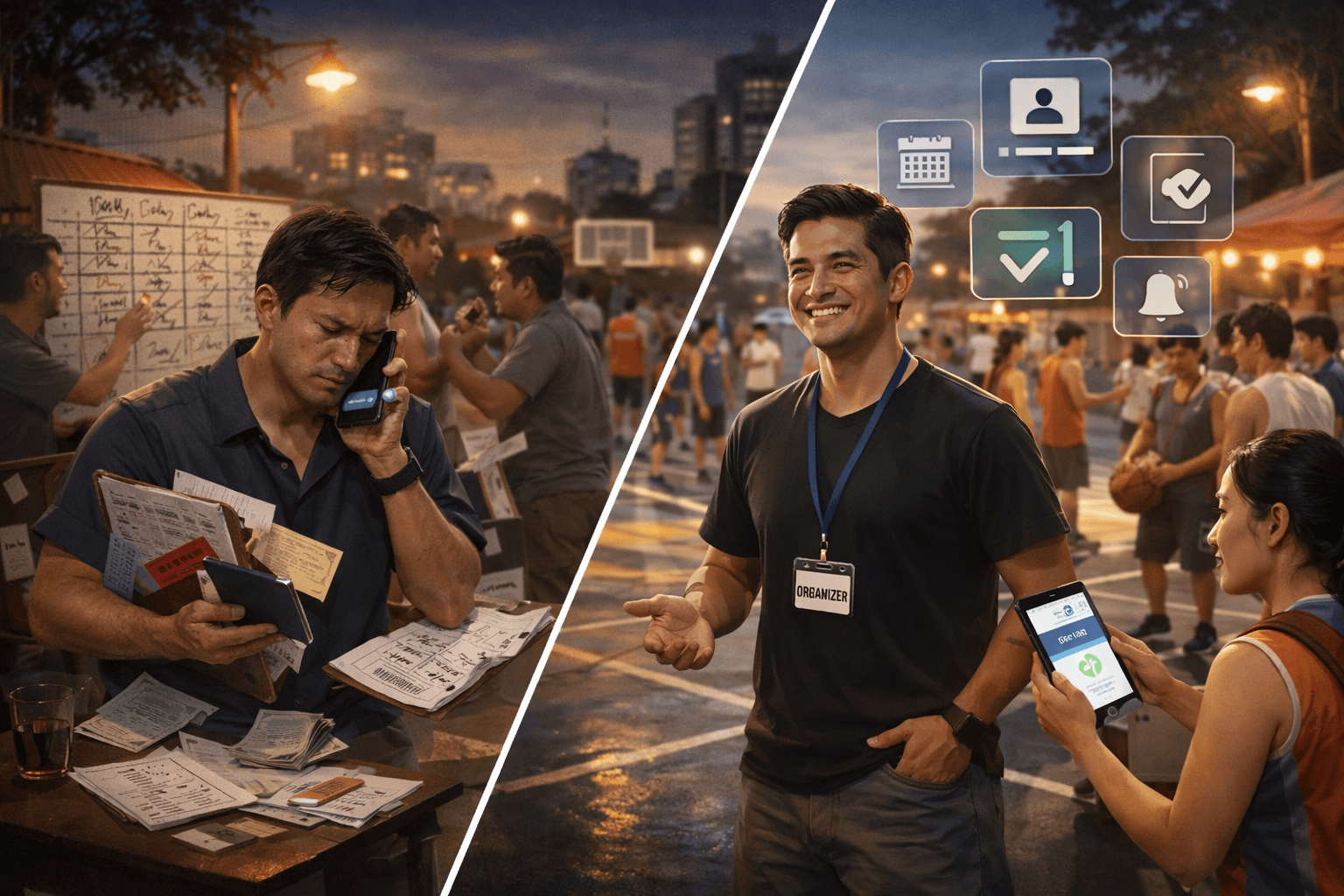
People loved playing. Communities wanted to grow. But organisers were drowning.
At first glance, grassroots sport in Southeast Asia looks alive and thriving. Courts are full. Group chats are active. New leagues keep popping up.
But when you look closer, most of it is held together by informal labour and goodwill.
One person does registration. The same person collects payments. The same person chases late replies, updates schedules, solves conflict, checks attendance, and explains rules repeatedly.
In many leagues, the system is still: "Message everyone and hope it works out."
That's not a participation problem. That's an infrastructure problem.
The moment it became personal for me
I've lived this from the inside — not as an outsider analyzing a market, but as someone who played, organised, and worked directly with sports communities.
I've seen how much hidden effort goes into making one game happen. I've seen captains spend hours every week just trying to lock a roster and collect fees. I've seen league operators hold entire competitions together with spreadsheets, chat threads, and memory.
And I've seen what happens next: burnout.
Not because they're weak. Because the system asks too much from too few.
That's the reason I became obsessed with this question:
What if grassroots and recreational sport had real operating infrastructure behind it — not just passion?
Why we built PlayLokal the way we did
From day one, we weren't trying to build a flashy social app first. We focused on the unglamorous core workflows that organisers deal with every single week:
• Registration
• Scheduling
• Payments
• Attendance flow
• Reminders
• Rules and roles
• Record-keeping from season to season
Because when those basics are broken, nothing else scales.
You can have great branding, great highlights, great vibes — but if your league operations are fragile, growth becomes painful.
What I've learned as a founder is this:
Grassroots and Recreational sport does not fail from lack of demand. It fails when the cost of organising gets too high for volunteers and community leaders to sustain.
A lesson I keep relearning as a founder
Startups test your belief system.
There were stretches where timelines slipped, plans changed, and outcomes took longer than expected. There were moments where it would have been easier to simplify the vision and chase something less operationally hard.
But every time I talk to organisers, team captains, and community admins, the same pain points come up. Different city, same problem pattern.
That's why I keep showing up for this.
Because solving "boring operations" is not boring when it unlocks more people playing, more communities staying active, and less burnout for the people who make sports happen.
The SEA lens matters
Southeast Asia particularly the Philippines has everything you want for grassroots and recreational sports growth:
• Young and social populations
• Strong local league culture
• High mobile engagement
• Deep passion for basketball and community sport
But we still run too many sports communities on fragmented tools never designed for sports operations.
We've normalised manual workarounds as if they're a permanent model.
They're not.
If we want grassroots and recreational sports to scale across SEA, we need to move from heroic organisers to repeatable systems.
That means treating infrastructure as essential, not optional.
What "infrastructure" means to me now
When I say infrastructure, I still care about physical spaces — courts, facilities, access.
But digital and operational infrastructure is just as critical:
• Clear registration pathways
• Reliable scheduling and communications
• Payment rails that reduce friction and disputes
• Shared rules and role clarity
• Records that carry forward, so each season starts stronger than the last
That's the foundation that turns community effort into sustainable participation.
Without it, every season resets. With it, communities compound.
Why this mission is worth building for
I believe grassroots sport is one of the strongest community engines we have in SEA.
It builds belonging. It improves health. It creates identity and opportunity. It keeps people connected offline in a world that is increasingly online.
But we can't keep expecting communities to scale on unpaid operational heroics forever.
We need better systems behind the scenes.
That is the work I'm committed to with PlayLokal: making grassroots and recreational sports easier to run, so more people can spend less time organising and more time playing.
If you run a league, captain a team, or manage a venue in Southeast Asia, I'd love to hear from you:
What is the one operational task that drains the most time in your weekly workflow?