Introduction
I still remember my first real "social media" moment.
Friendster.
It felt like magic. Overnight, you had this digital version of your real life. A list of friends. Little glimpses into people's personalities. And that feature I loved most: testimonials. It was simple, but it did something powerful, it reminded you that your relationships were real, and that people saw good in you.
It spread the way the best things spread back then: friend to friend, not algorithm to eyeball.
Then MySpace came along and made it louder, more custom, more "look at me," but it still felt like a place where you were mostly hanging out with people you actually knew. Even the silly stuff like being someone's top friends felt meaningful because it was still rooted in real relationships.
And then Facebook arrived.
The Facebook Era
At the start, Facebook was incredible. Clean. Fast. Easy. It made reconnecting effortless.
But somewhere along the way, I realised something that I couldn't unsee:
I wasn't building deeper connections anymore. I was collecting acquaintances.
I looked at my friend list one day and thought, how did I get here? Thousands of "friends," but if I'm honest, only a small number were people I truly knew people who had earned a front-row seat to my life.
And that's when it hit me: I was sharing my life with people I wouldn't even invite to my home.
So I started cleaning up. Trimming the list. Making it smaller. More intentional.
But the platform itself was already changing.
The shift: from connection to consumption
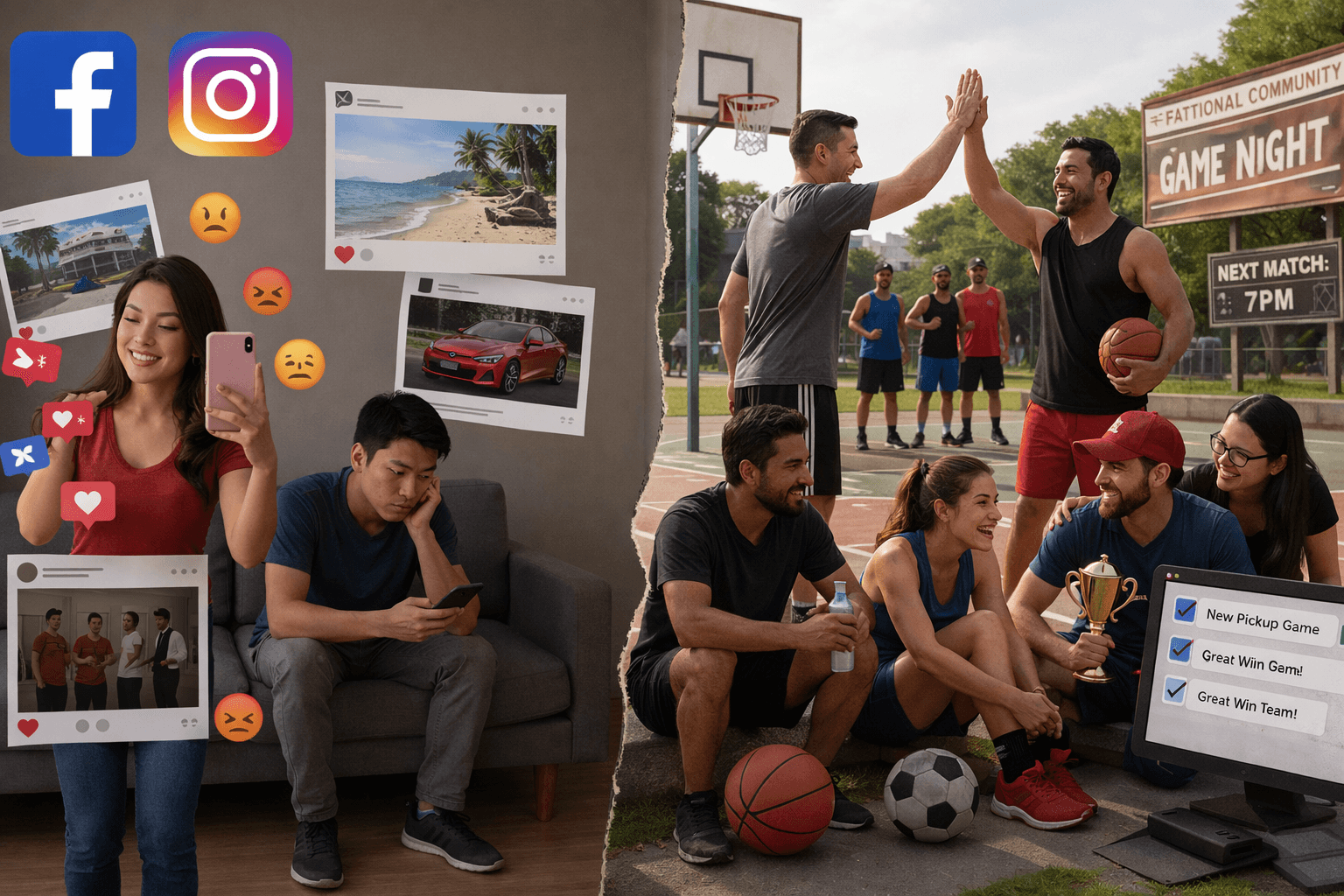
At some point, Facebook and Instagram stopped feeling like places you go to connect… and started feeling like places you go to perform.
Video took over. Virality became the reward. Likes became the dopamine loop.
And it's not just a "people problem." A lot of this is design.
Even Meta has acknowledged a change in what we're actually doing on these apps: only a small share of time on Facebook and Instagram is now spent on content from friends more of it is recommended content and entertainment.
So the experience becomes this weird cycle:
As a creator, you feel pressure to keep posting to stay "relevant." As a viewer, you start comparing your real life to someone else's curated highlight reel.
And suddenly, a platform that was meant to make you feel connected… makes you feel restless.
Why younger people feel it too
It's not surprising to me that younger people aren't treating Facebook the way we did.
Research shows Facebook usage among teens has dropped massively over the past decade (today around a third of teens say they use it, down from roughly seven in ten in 2014–15).
What's even more telling is the emotional side. It is also found fewer teens now say social media makes them feel like they have people who can support them through tough times down to 52% in 2024 from 67% in 2022.
That doesn't mean social media is "all bad." It just matches what a lot of us feel: these platforms are great at connection in theory, but not always great at delivering the right kind of connection.
The irony: the most "real" thing left on Facebook is Groups
Here's the part that makes me pause.
Even though Facebook feels noisy now, there's still one place where it feels useful and human: Groups.
Especially Sports Groups.
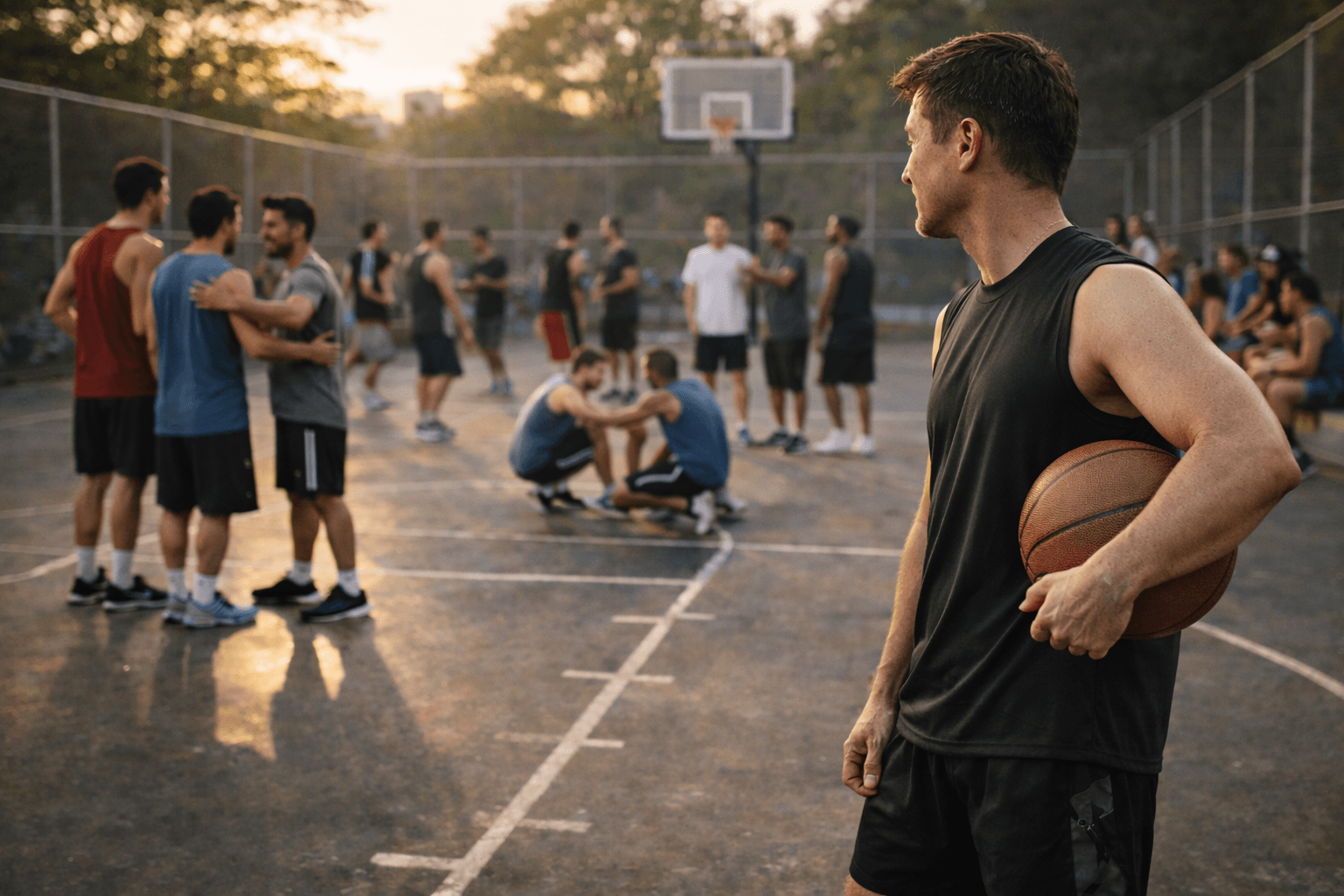
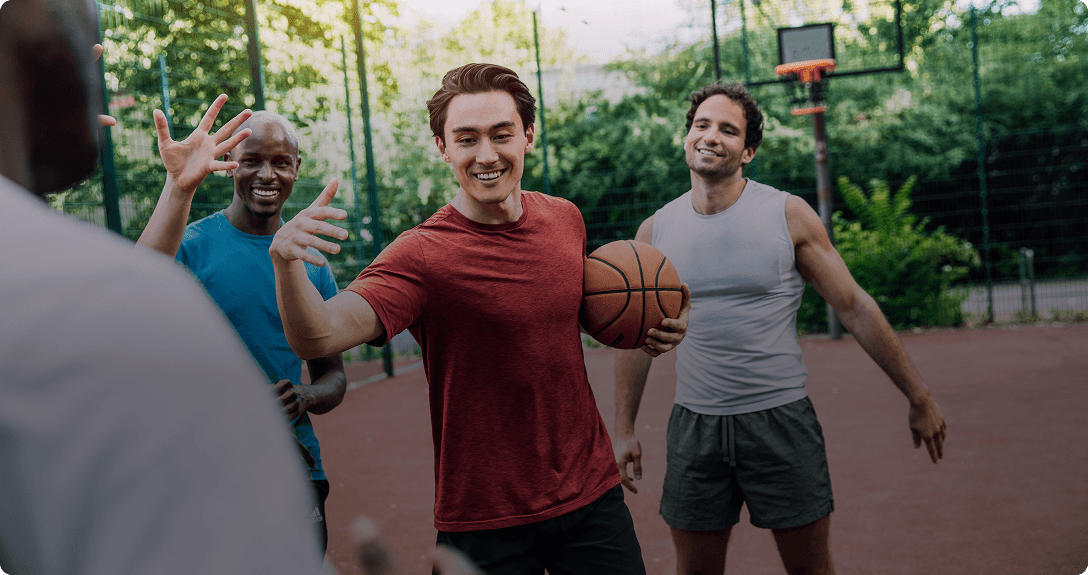
Basketball groups. Pickup run groups. Local league communities.
People aren't there to "go viral." They're there to actually meet up, play, organise, share highlights with people who care, and build something local.
And that's not a small corner of the internet by some industry estimates, around 1.8 billion people use Facebook Groups each month.
That number makes sense to me, because Groups are one of the last places where the platform still behaves like the early promise of social media: find your people, and do something real together.
But even then… the problem remains:
You open Facebook for your basketball group, and you still get dragged through everything else you didn't ask for.
The thought I can't shake
What if there was a place designed only for the thing people actually want?
Not a platform built to keep you scrolling. A platform built to help you belong.
A place where the default feed isn't noise. It's community. Where your "tribe" isn't random followers, it's teammates, organisers, players, leagues, and local sports culture. Where the goal isn't attention, it's participation, relationships, and shared experiences.
That's the world I keep thinking about.
Because sport is one of the rare things that still pulls people into real life. Into real connection. Into community.
And I don't think we're crazy for wanting the internet to help us do more of that, not less.
If you're still on Facebook or Instagram mainly for one community (sports or otherwise), what's the one thing keeping you there? And what's the one thing you wish those platforms did better?